What are the benefits of custom software for manufacturing?
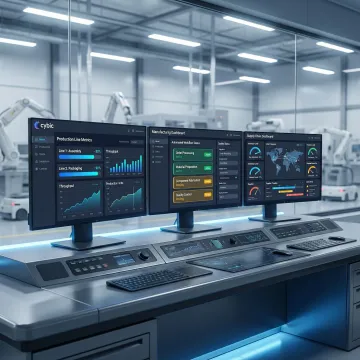
Custom software is built around your specific production workflows, machinery, compliance requirements, and data systems unlike off-the-shelf tools that require your operations to adapt to them. Benefits include real-time production visibility, automated quality control, seamless ERP integration, reduced manual data entry, and the ability to scale the system as your manufacturing needs evolve without paying for unused features.
What is custom application development?
Custom application development is the process of designing, building, testing, and deploying software that is engineered specifically for a business's unique requirements rather than purchasing a pre-built, generic solution. For manufacturers, this means creating applications that connect shop floor systems, manage supply chains, automate reporting, and integrate with existing ERP or CRM platforms using modern frameworks and APIs.
How long does it take to develop custom manufacturing software?
Timelines vary based on scope and complexity. A focused module such as a production monitoring dashboard or automated reporting tool typically takes 8-16 weeks. Full enterprise platforms with ERP integration, AI features, and multi-site deployment generally range from 4 to 12 months. Cybic uses phased delivery to ensure working components reach your teams faster.
Can Cybic integrate with our existing ERP or legacy manufacturing systems?
Yes. Cybic specializes in integrating custom software with existing ERP, CRM, MES, and legacy systems using custom API development and middleware connectors. The approach is designed to extend the value of your current infrastructure rather than replace it wholesale minimizing disruption to ongoing production while introducing modern capabilities progressively.
What types of AI features can be built into manufacturing software?
Cybic can embed predictive maintenance models, demand forecasting, automated quality inspection using computer vision, intelligent document processing for procurement and compliance, supply chain optimization agents, and real-time anomaly detection. These capabilities are integrated directly into your operational workflows rather than deployed as standalone tools that teams need to query separately.
How does Cybic ensure data security and compliance in manufacturing software?
Security and governance are embedded at the architectural level and not bolted on afterward. Cybic's systems include role-based access controls (RBAC), encrypted data protection in transit and at rest, full audit trails, and regulatory alignment with standards like SOC 2, ISO, and GDPR. Critically, Cybic does not use proprietary enterprise data to train AI models.
Will the custom software scale as our manufacturing operations grow?
Yes. Cybic designs infrastructure-agnostic architectures that operate across cloud, hybrid, and on-premises environments built to scale across additional production sites, users, data volumes, and new workflows without requiring a full system rebuild. Scalability is planned into the architecture from the initial design phase, not retrofitted later.
Does Cybic provide ongoing support after the software is deployed?
Yes. Cybic provides post-launch maintenance, performance monitoring, feature enhancements, and operational support as part of its application development engagements. This includes bug resolution, infrastructure optimization, model retraining where AI is involved, and iterative updates as your manufacturing processes and compliance requirements change over time.