What is enterprise application integration?
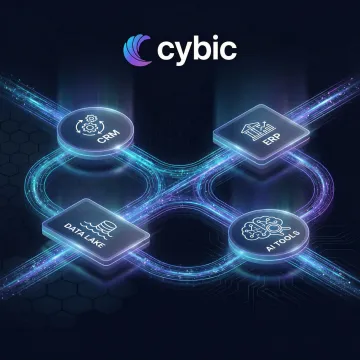
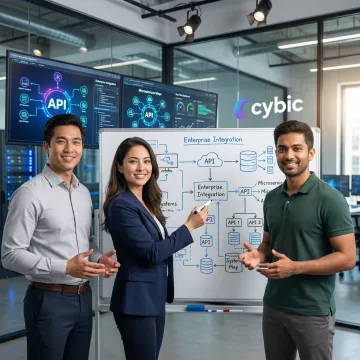
Enterprise Application Integration (EAI) is the process of connecting disparate software systems such as CRMs, ERPs, data warehouses, and AI platforms so they can share data and workflows seamlessly. EAI eliminates data silos, reduces manual handoffs, and creates a unified operational environment where all systems communicate in real time, improving decision-making and business efficiency.
What is the difference between ERP and EAI?
An ERP (Enterprise Resource Planning) system is a single, centralized application that manages core business functions like finance, HR, and supply chain. EAI (Enterprise Application Integration) is a strategy and set of technologies that connects multiple disparate systems including ERPs so they can exchange data and work together. EAI enables your ERP to communicate with CRMs, data lakes, AI tools, and other enterprise platforms.
What types of systems can Cybic integrate?
Cybic integrates a wide range of enterprise systems including CRMs (e.g., Salesforce), ERPs, SCM platforms, data lakes, cloud data warehouses (Snowflake, Databricks), AI and LLM platforms, legacy on-prem applications, and SaaS tools. Whether your environment is cloud-native, hybrid, or on-prem, our engineers design connectors and APIs to bridge every layer of your technology stack.
How does Cybic ensure data security during integration?
Security is embedded at the architectural level throughout every integration Cybic builds. This includes encrypted data protection in transit and at rest, role-based access controls (RBAC), audit trails for all data exchanges, and compliance alignment with standards such as SOC 2, HIPAA, GDPR, and CCPA. No proprietary enterprise data is ever used for model training, and all integrations are governed by strict access policies from day one.
How long does an enterprise integration project typically take?
Project timelines vary based on the complexity of your existing systems, the number of applications being connected, and the depth of custom API or middleware development required. Targeted integrations between two or three systems may be completed in four to eight weeks, while full enterprise ecosystem integrations spanning legacy modernization, AI pipelines, and multi-cloud infrastructure typically range from three to six months.
Does Cybic support legacy system integration?
Yes. Cybic specializes in connecting and modernizing legacy systems as part of broader integration engagements. Our team re-engineers legacy workflows, builds modern API layers over existing applications, and migrates data to cloud-ready architectures all without disrupting active business operations. This allows enterprises to preserve investments in existing systems while enabling them to participate in modern data and AI ecosystems.
What industries does Cybic serve with its integration services?
Cybic delivers enterprise application integration services across Oil & Gas, Healthcare, Manufacturing, Retail, and the Public Sector. Each industry engagement is tailored to sector-specific compliance requirements, data governance standards, and operational workflows ensuring integrations meet regulatory frameworks like HIPAA for healthcare or support real-time monitoring needs in energy infrastructure environments.
What ongoing support does Cybic provide after an integration is live?
Following deployment, Cybic provides continuous monitoring, governance oversight, and proactive maintenance for all integrated systems. This includes real-time pipeline health monitoring, alerting, audit log reviews, access control updates, and performance optimization. Our team remains available to adapt integrations as your enterprise systems evolve, ensuring long-term reliability and alignment with your business objectives.