What is legacy software modernization?
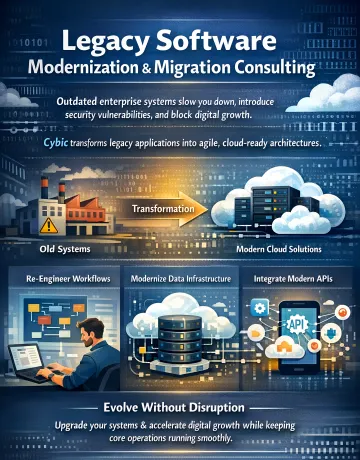
Legacy software modernization is the process of updating, re-architecting, or migrating outdated enterprise systems to modern, cloud-ready platforms. This includes replacing obsolete code, re-engineering workflows, integrating modern APIs, and transitioning to scalable infrastructure all while preserving core business logic and minimizing disruption to ongoing operations.
What is legacy enterprise software?
Legacy enterprise software refers to older business-critical applications that were built on outdated technologies, frameworks, or architectures and are no longer aligned with modern standards. These systems often lack cloud compatibility, modern security controls, API integrations, and scalability making them costly to maintain and a barrier to digital transformation initiatives.
What are the 5 R's of modernization?
The 5 R's of modernization are: Rehost (lift-and-shift to cloud), Replatform (minor optimizations during migration), Re-architect (restructure the application for cloud-native design), Rebuild (rewrite from scratch using modern frameworks), and Retire (decommission systems no longer needed). Cybic evaluates each system against these options plus Retain to recommend the most effective path.
How long does a legacy system modernization project typically take?
Timelines vary significantly based on system complexity, data volume, and the chosen modernization strategy. A focused rehosting effort can take 4-12 weeks, while a full re-architecture or rebuild of a complex enterprise platform may span 6-18 months. Cybic structures all projects in phased milestones to deliver incremental value throughout the engagement.
Will modernization disrupt our ongoing business operations?
Cybic specifically designs its migration approach to avoid operational disruption. We execute transitions in controlled, phased increments with rollback protocols and parallel-run periods built into the plan. Critical systems remain operational throughout, and our teams integrate directly with your infrastructure and compliance requirements to ensure continuity at every stage.
Which cloud platforms does Cybic support for legacy migrations?
Cybic supports migrations to AWS, Microsoft Azure, and Google Cloud, as well as modern data platforms including Snowflake and Databricks. We also design hybrid and on-premises architectures for organizations with regulatory or data sovereignty requirements. Our solutions are infrastructure-agnostic, avoiding vendor lock-in and giving you flexibility to scale across environments.
How does Cybic handle data security and compliance during migration?
Security and compliance are embedded at the architectural level and not added as an afterthought. Cybic implements role-based access controls (RBAC), encrypted data protection in transit and at rest, audit trails, and regulatory alignment with SOC 2, HIPAA, GDPR, and ISO standards. Governance frameworks are defined before migration begins and validated throughout the process.
What industries does Cybic specialize in for legacy modernization?
Cybic has deep expertise across Oil & Gas, Healthcare, Manufacturing, Retail, and the Public Sector. Each industry carries unique compliance requirements, data governance challenges, and operational constraints that our consultants account for during system assessment and roadmap design ensuring modernized architectures are purpose-fit for your sector's specific regulatory and operational environment.