What does an enterprise transformation consultant do?
An enterprise transformation consultant assesses your current technology landscape, identifies high-impact AI and digital opportunities, and designs a prioritized roadmap to modernize operations. At Cybic, consultants go further, they work alongside engineering teams to govern, integrate, and deploy the resulting systems, ensuring strategy translates into functional, measurable outcomes rather than recommendations alone.
What is enterprise digital transformation?
Enterprise digital transformation is the process of fundamentally redesigning how an organization operates by embedding AI, data intelligence, automation, and modern technology into its core workflows. It spans legacy modernization, cloud migration, AI adoption, and data governance with the goal of improving decision-making speed, operational efficiency, and competitive positioning at scale.
How long does a digital transformation engagement typically take?
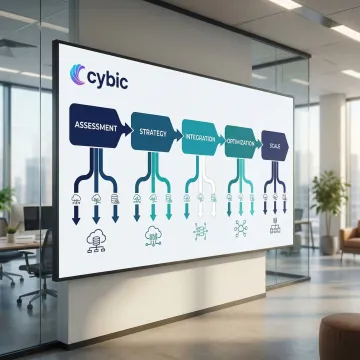
Transformation engagements vary by scope. A discovery and roadmap phase typically takes 4–8 weeks. Implementation of individual initiatives such as deploying an AI copilot or modernizing a data warehouse generally spans 3–6 months. Full enterprise-wide transformation is a phased, multi-year process, structured around measurable milestones and quick wins along the way.
How does Cybic approach AI governance and regulatory compliance?
Cybic embeds governance directly into system architecture rather than treating it as a post-deployment checklist. This includes role-based access controls, encrypted data protection in transit and at rest, AI action auditability, and compliance with GDPR, HIPAA, and CCPA. Critically, Cybic does not train AI models on your proprietary enterprise data.
Which industries does Cybic serve with transformation consulting?
Cybic's transformation practice serves enterprises across Oil & Gas, Healthcare, Manufacturing, Retail, and the Public Sector. Each engagement is tailored to the regulatory environment, operational structure, and data maturity of the specific industry whether that means clinical workflow optimization in healthcare or supply chain intelligence in manufacturing.
Can Cybic work with our existing enterprise technology stack?
Yes. Cybic's solutions are designed to be infrastructure-agnostic and integration-first. Whether your enterprise runs on AWS, Azure, Google Cloud, an on-premises setup, or a hybrid environment, Cybic architects systems that connect with your existing CRMs, ERPs, data lakes, and operational tools via custom APIs and governed data pipelines.
How is ROI measured in a digital transformation engagement?
Cybic defines KPIs and ROI metrics during the roadmap phase before any implementation begins. These typically include cost reduction from automation, reduction in manual processing time, data latency improvements, and revenue impact from improved decision-making. Post-deployment, real-time dashboards track performance against these benchmarks on an ongoing basis.
What is the difference between Cybic's consulting and a traditional IT consulting firm?
Traditional IT consulting often delivers strategy documents and vendor recommendations. Cybic operates as an engineering-led practice consultants work directly with architects and engineers who build and deploy the systems. This eliminates translation gaps between design and execution and means your engagement produces a working, integrated AI or data system, not just a roadmap deck.