What is application modernization?
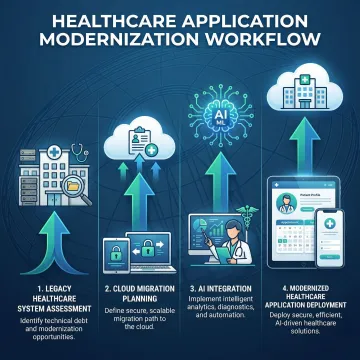
Application modernization is the process of updating legacy software systems replacing outdated architectures, code, and infrastructure with modern, cloud-native, and AI-ready equivalents. In healthcare, this means transforming aging EHRs, clinical tools, and administrative platforms into scalable, interoperable systems that support real-time data exchange, compliance, and intelligent automation without disrupting ongoing care delivery.
What are the goals of application modernization?
The primary goals are to improve system agility, reduce technical debt, strengthen security and compliance, and unlock new capabilities like AI and real-time analytics. For healthcare specifically, modernization aims to improve clinical workflow efficiency, achieve HIPAA-aligned data governance, enable EHR interoperability, reduce operational costs, and position the organization to adopt AI-driven tools that improve patient and staff outcomes.
How does Cybic ensure HIPAA compliance during modernization?
HIPAA compliance is embedded at the architectural level and not added as an afterthought. Cybic implements role-based access controls, end-to-end data encryption in transit and at rest, comprehensive audit trails, and governance frameworks from the outset. We conduct compliance gap assessments before migration begins and validate compliance posture at every phase of the modernization lifecycle.
Will healthcare operations be disrupted during the modernization process?
No. Cybic uses phased migration strategies such as rehosting, re-platforming, or refactoring, designed specifically to maintain operational continuity. Clinical workflows remain active throughout the transition. We plan cutovers during low-impact windows and run parallel environments where necessary to ensure zero downtime for patient-facing systems and administrative operations.
What types of healthcare systems can Cybic modernize?
Cybic modernizes a wide range of healthcare applications including legacy EHRs, clinical decision support tools, patient portals, revenue cycle management systems, claims processing platforms, healthcare data warehouses, and administrative workflow applications. We also integrate modern APIs and AI capabilities into newly modernized environments to extend their value beyond migration.
Which cloud platforms does Cybic support for healthcare modernization?
Cybic delivers cloud-agnostic modernization across AWS, Microsoft Azure, and Google Cloud, all of which offer HIPAA-eligible services. We assess your existing infrastructure, workload requirements, and compliance needs to recommend the optimal platform or multi-cloud strategy, ensuring your modernized environment is both performant and cost-efficient at scale.
How long does a healthcare application modernization engagement typically take?
Timelines vary based on system complexity, scope, and organizational readiness. A focused modernization of a single application or data platform may take three to six months. Enterprise-wide transformation programs spanning multiple systems typically run twelve to twenty-four months, executed in phased increments so each phase delivers independent business value and measurable clinical improvements.
Does Cybic provide ongoing support after modernization is complete?
Yes. Cybic offers post-deployment application maintenance, performance monitoring, AI governance oversight, and continuous optimization services. As healthcare regulations evolve and clinical demands change, our teams ensure your modernized systems remain compliant, scalable, and aligned with your operational objectives, preventing newly built systems from becoming tomorrow's legacy infrastructure.